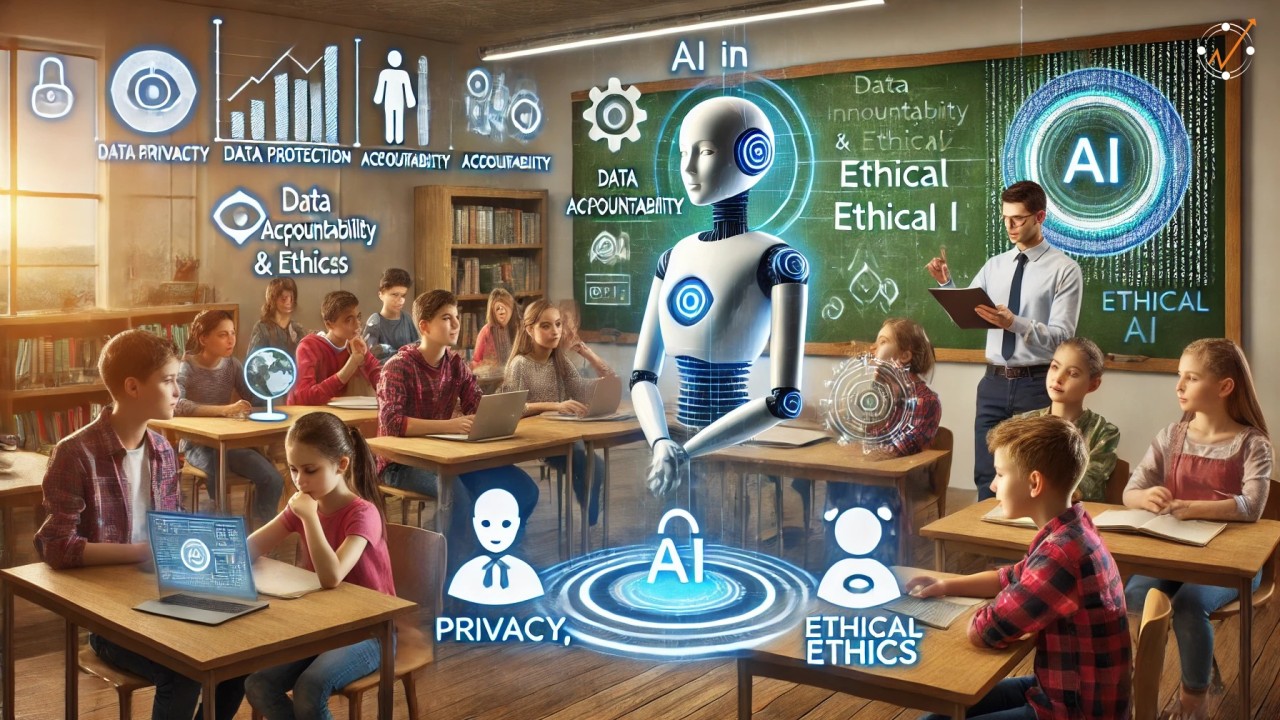
Artificial intelligence has emerged as a transformative force across multiple sectors, and education is no exception. From personalized learning platforms to intelligent tutoring systems, AI technologies promise to revolutionize how students learn, teachers instruct, and institutions operate. Yet with these advancements come complex ethical questions. The integration of AI into education raises concerns about privacy, fairness, transparency, accountability, and the broader societal impact of automated decision-making. Understanding the ethics of AI in education is essential to ensure that technological innovation enhances learning while safeguarding human values and equity.
The first ethical consideration in AI-driven education is privacy and data protection. AI systems rely on large datasets to function effectively. Student information, including academic performance, behavioral patterns, demographic details, and personal preferences, is collected and analyzed to deliver personalized experiences. While this data can improve learning outcomes, it also presents risks if improperly managed. Unauthorized access, data breaches, or misuse of sensitive information can compromise student safety and trust. Ethical AI deployment requires robust policies for data collection, storage, and sharing, ensuring that learners’ privacy is respected and protected.
Closely linked to privacy is the question of informed consent. Students and parents must understand what data is being collected, how it will be used, and the potential implications of AI-based decision-making. Consent should not be a mere formality but an ongoing, transparent process. Learners should have the right to opt out of AI-driven programs, challenge decisions, and access information about how algorithms influence educational experiences. Ethical frameworks in education demand that students remain active participants in decisions that affect their learning journeys.
Equity and fairness represent another critical ethical dimension. AI systems are only as unbiased as the data and design choices that underpin them. Historical and societal inequalities can be inadvertently embedded into algorithms, resulting in unfair outcomes. For instance, predictive systems may misinterpret student potential based on biased historical data, disadvantaging certain groups. Disparities in access to technology can further exacerbate inequality, creating a digital divide where some students benefit from AI-enhanced learning while others are left behind. Ethical AI in education requires deliberate attention to inclusivity, careful evaluation of algorithmic bias, and strategies to ensure equitable access for all learners.
Transparency and explainability are equally important. Many AI models, especially complex neural networks, operate as “black boxes,” producing recommendations or decisions without clear explanations. In educational contexts, this opacity raises ethical concerns. Students, teachers, and parents must be able to understand how AI reaches conclusions, such as identifying learning gaps or suggesting interventions. Explainable AI supports accountability and trust, ensuring that automated systems supplement rather than obscure human judgment. Educators must be equipped to interpret AI outputs and make informed decisions based on both data and professional insight.
Accountability is a fundamental ethical principle in AI deployment. When AI systems influence grades, learning pathways, or disciplinary actions, it is essential to define who is responsible for outcomes. Developers, institutions, and educators share responsibility for ensuring that AI systems operate fairly and effectively. Clear lines of accountability prevent the abdication of ethical responsibility and ensure that human oversight remains central to educational decisions. AI should assist educators rather than replace them, preserving the human judgment essential to nuanced teaching and guidance.
Another ethical consideration is the potential for surveillance and behavioral monitoring. AI-driven educational platforms often track student activity, engagement, and even emotional states through sensors, cameras, or online behavior. While such monitoring can help identify learners needing support, it may also create intrusive environments that undermine autonomy, trust, and psychological safety. Ethical AI requires balancing the benefits of monitoring with respect for individual dignity, ensuring that surveillance does not become coercive or excessive.
The integration of AI also raises concerns about the commodification of education. When AI systems are developed and deployed by private companies, financial motives may influence design choices, prioritizing efficiency or profitability over educational quality or student well-being. Ethical frameworks demand transparency regarding commercial interests and the alignment of AI tools with pedagogical goals rather than market-driven imperatives. Education should remain a public good guided by the holistic development of learners.
Cultural sensitivity and contextual relevance constitute another ethical dimension. AI algorithms developed in one cultural or institutional context may not translate effectively to others. Educational systems vary widely in language, pedagogical philosophy, social norms, and student needs. Ethical AI deployment requires attention to local contexts, avoiding one-size-fits-all solutions that may marginalize learners or undermine cultural values. Developers and educators must collaborate to ensure AI systems respect diversity and respond to the specific needs of the communities they serve.
The role of human interaction in learning is also ethically significant. Education is not merely the transmission of knowledge; it is a social and emotional process. AI can enhance efficiency, provide personalized feedback, and analyze learning patterns, but it cannot replicate the mentorship, empathy, and inspiration that human teachers provide. Ethical considerations require that AI supplements rather than replaces human interaction, preserving the relational dimensions of education. Technology should support human educators in cultivating critical thinking, creativity, and socio-emotional skills, not diminish these essential aspects of learning.
Long-term societal impact is another critical concern. The widespread adoption of AI in education may influence societal norms, labor markets, and the values associated with learning. Overreliance on automated systems could reduce critical reflection, creative exploration, or ethical reasoning if students defer too heavily to algorithmic guidance. Education systems must cultivate awareness of the limits of AI, encouraging learners to engage critically with technology and to understand its influence on thought processes, decision-making, and societal structures.
In addressing ethical challenges, regulatory and policy frameworks play a vital role. Governments, institutions, and professional bodies must establish standards for data protection, algorithmic fairness, transparency, and accountability. Ethical guidelines should be embedded in the design, implementation, and evaluation of AI systems. Policies must be adaptable, reflecting the rapid pace of technological innovation while ensuring that student rights, equity, and educational integrity are maintained.
Professional development for educators is essential to ethical AI integration. Teachers must understand how AI systems operate, interpret outputs, and make informed pedagogical decisions. They should be able to identify bias, monitor unintended consequences, and guide students in navigating AI-driven learning experiences responsibly. Ethical literacy in AI becomes part of teacher preparation, ensuring that human judgment remains central to educational practice.
Ethics also intersects with accessibility. AI has the potential to support learners with disabilities, providing personalized accommodations, assistive technologies, and adaptive learning pathways. However, ethical deployment requires careful attention to design, ensuring that systems genuinely enhance inclusion rather than inadvertently creating new barriers. Accessibility must be considered from the earliest stages of development, reflecting a commitment to equity and empowerment.
Collaboration between stakeholders is fundamental to addressing ethical issues in AI education. Developers, educators, students, parents, policymakers, and ethicists must engage in dialogue, co-design, and ongoing evaluation. AI ethics cannot be reduced to technical adjustments alone; it requires a holistic understanding of human values, societal norms, and educational objectives. Participation from diverse perspectives ensures that AI tools serve broad educational goals rather than narrow interests.
Ultimately, the ethics of AI in education is about balancing innovation with responsibility. AI has immense potential to enhance learning, increase efficiency, and support personalized education. At the same time, it poses risks to privacy, equity, transparency, and human agency. Ethical deployment requires deliberate attention to these challenges, embedding safeguards, human oversight, and critical reflection into every stage of AI integration.
By approaching AI with an ethical mindset, educational institutions can harness technology to expand opportunity, deepen understanding, and foster skills essential for the modern world. Students benefit not only from personalized learning experiences but from environments that respect their dignity, protect their rights, and encourage critical engagement with technology. Education becomes both a space of innovation and a domain of ethical responsibility.
As AI continues to evolve, so too must the ethical frameworks guiding its use. Ongoing research, dialogue, and policy development are necessary to anticipate challenges, assess outcomes, and ensure alignment with the values of fairness, transparency, inclusivity, and human flourishing. In the intersection of AI and education, ethics is not a constraint on progress but a compass guiding responsible, meaningful, and equitable innovation.
Leave a Reply