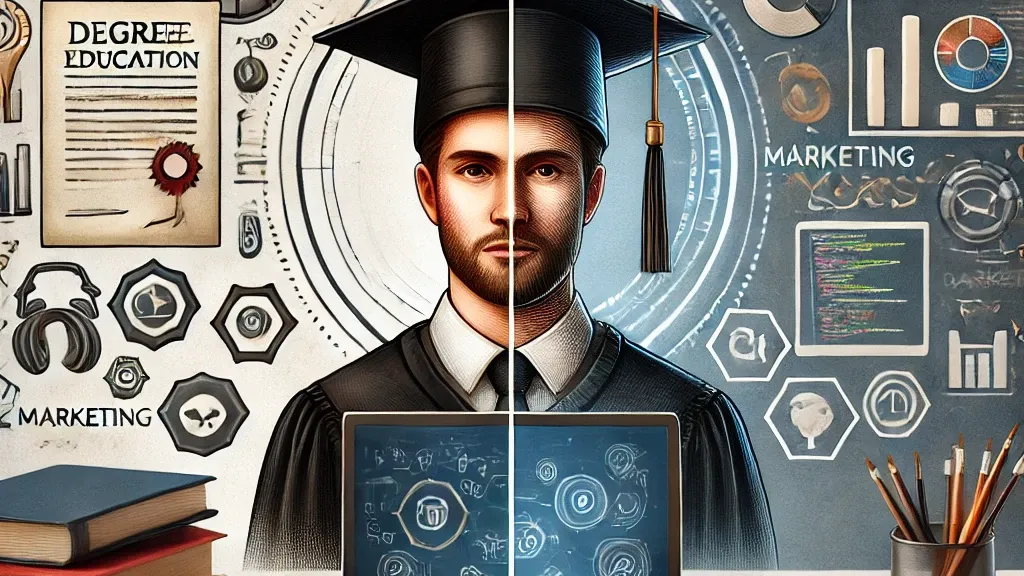
For decades, academic degrees have symbolized achievement, knowledge, and a pathway to professional success. Universities, colleges, and other institutions have traditionally functioned as gatekeepers to opportunity, signaling expertise, competence, and social credibility. A degree often determined employability, career trajectory, and societal status. Yet, in the rapidly evolving landscape of the 21st century, the value of traditional degrees is being questioned. Technological advancement, changing labor markets, and the rise of alternative learning pathways have prompted a reconsideration of what it means to be qualified, skilled, and employable.
The traditional model of higher education assumes that acquiring formal knowledge over several years equips individuals for specific professional roles. Historically, this model worked well in relatively stable economies, where technical expertise and domain-specific knowledge were sufficient to sustain long-term careers. Degrees served as reliable markers of competence and a shared vocabulary for employers to assess candidates. They also provided socialization, critical thinking development, and exposure to networks of peers and mentors.
However, the pace of change in today’s world is unprecedented. Emerging technologies such as artificial intelligence, automation, biotechnology, and advanced analytics are reshaping industries at a speed that formal education alone struggles to match. Jobs once considered secure are evolving or disappearing, while entirely new roles emerge that were unimaginable a decade ago. In this context, a degree, which represents mastery of knowledge at a fixed point in time, may no longer guarantee readiness for the dynamic challenges of contemporary careers.
Employers increasingly emphasize skills, adaptability, and practical experience over formal credentials. Technical competence, problem-solving ability, communication skills, and critical thinking often outweigh the prestige of an academic institution. Certifications, micro-credentials, and portfolio-based assessments provide evidence of capability without the traditional time and financial commitments associated with degrees. Professionals who continuously learn, upskill, and demonstrate proficiency through applied projects are often more competitive than degree holders with limited practical experience.
The digital revolution has fueled the growth of alternative learning pathways. Online courses, Massive Open Online Courses (MOOCs), bootcamps, and professional certification programs enable learners to acquire targeted skills rapidly. Platforms offering coding, data science, digital marketing, design thinking, and entrepreneurship provide credentials that are increasingly recognized by employers. These programs allow students to adapt to changing industry requirements without committing to multi-year degree programs. As access to high-quality learning expands globally, the traditional degree becomes one of many options rather than a sole pathway to professional success.
The notion of lifelong learning further challenges the primacy of degrees. Careers today rarely follow linear trajectories. Individuals may switch industries, acquire new roles, or develop hybrid skill sets over decades. Success depends less on a credential obtained in youth and more on the ability to learn continuously, adapt, and apply knowledge in diverse contexts. Employers value individuals who demonstrate agility, initiative, and a commitment to ongoing professional development, attributes not exclusively signaled by a degree.
Despite these trends, degrees are unlikely to disappear entirely. They still confer social, cultural, and cognitive benefits. Academic programs foster critical thinking, research literacy, and foundational knowledge that alternative credentials may not fully replicate. Degrees provide structured learning environments, mentorship, and networks that support professional and personal growth. For certain professions, such as medicine, law, engineering, and academia, formal degrees remain essential due to regulatory requirements, societal expectations, and the complexity of specialized knowledge.
The perceived value of degrees is also influenced by cultural and regional factors. In many societies, degrees serve as markers of social mobility, prestige, and legitimacy. Parents, institutions, and employers may continue to prioritize degrees as symbols of achievement and credibility. The challenge is to balance these traditional expectations with the evolving demands of modern labor markets. Educational systems must adapt, offering pathways that integrate practical skills, experiential learning, and global perspectives alongside formal degrees.
Hybrid approaches represent a promising future. Programs that combine academic degrees with industry certifications, project-based learning, internships, and experiential opportunities create graduates equipped with both foundational knowledge and applied skills. Such models recognize that mastery of theory alone is insufficient; employability increasingly depends on the ability to apply learning in real-world contexts. This integration aligns education with the needs of a dynamic economy, without discarding the intellectual rigor of traditional degrees.
Ethical considerations emerge in evaluating the relevance of degrees. As credentialing diversifies, equity and access become critical concerns. Not all learners have equal opportunities to pursue expensive degrees or access high-quality online alternatives. Without deliberate interventions, disparities in education may deepen, reinforcing social inequality. Policymakers, institutions, and employers must ensure that multiple pathways to professional readiness are accessible, inclusive, and recognized fairly.
Technological literacy is reshaping the skill set expected of graduates, further influencing the role of degrees. AI, automation, and data-driven decision-making require continuous adaptation and technical competence. Degrees in traditional disciplines may provide foundational knowledge, but without complementary digital skills, graduates may struggle to meet workplace demands. Education must integrate technology fluency, critical thinking, and ethical reasoning to maintain the relevance of formal qualifications.
Employers also face challenges in evaluating qualifications. Traditional resumes emphasizing degrees may no longer suffice. Skills portfolios, project outcomes, professional networks, and verified credentials increasingly provide a richer representation of capability. This shift may democratize opportunity, allowing talent to be recognized beyond formal credentials, yet it requires standardized assessment frameworks to ensure fairness and consistency.
Globalization further complicates the role of degrees. As labor markets become international, employers encounter candidates with diverse educational backgrounds. Degrees from different institutions and countries may vary in rigor, focus, and recognition. Alternative credentials, micro-certifications, and online learning provide additional comparability, offering signals of competency that are internationally understandable. In this context, the degree competes with a broader ecosystem of educational evidence.
The evolving value of degrees also impacts student expectations. Learners increasingly weigh return on investment, practical relevance, and career alignment when considering formal education. Rising tuition costs, coupled with the availability of alternative pathways, encourage critical assessment of whether traditional degrees provide sufficient benefits. Institutions must respond by offering flexible programs, experiential learning opportunities, and outcomes-oriented curricula to remain relevant.
Soft skills remain a key differentiator that degrees may help cultivate. Communication, collaboration, leadership, ethical reasoning, and cultural awareness are developed through structured educational experiences, peer interaction, and mentorship. While alternative credentials may certify technical competence, degrees often provide environments for holistic growth. Integrating these skills into degree programs ensures graduates remain competitive and adaptable in a rapidly evolving job market.
Ultimately, the question is not whether degrees will vanish, but how their role will transform. Degrees are likely to coexist with a diverse array of credentials, certifications, and skill-based evidence. Their value will increasingly depend on integration with practical experience, continuous learning, and demonstrable competencies. Educational institutions that embrace this evolution—offering hybrid, flexible, and interdisciplinary programs—will produce graduates equipped for the uncertainties and opportunities of the modern workforce.
The future of work emphasizes adaptability, problem-solving, creativity, and technological fluency. Degrees remain a pathway to foundational knowledge, critical thinking, and professional credibility. Yet their significance as the sole marker of competence is diminishing. Lifelong learning, alternative credentials, and experiential engagement are becoming equally essential indicators of readiness and potential.
In conclusion, degrees will continue to matter, but not in isolation. Their relevance depends on alignment with skills, adaptability, and the capacity to navigate evolving professional landscapes. The most effective educational strategies combine foundational academic knowledge with applied experience, continuous skill development, and ethical awareness. Students, educators, and institutions must recognize that education in the future is multifaceted, dynamic, and learner-centered. Degrees are no longer the endpoint but one component of a broader, more flexible system designed to prepare individuals for a world in which knowledge, technology, and opportunity evolve continuously
Leave a Reply