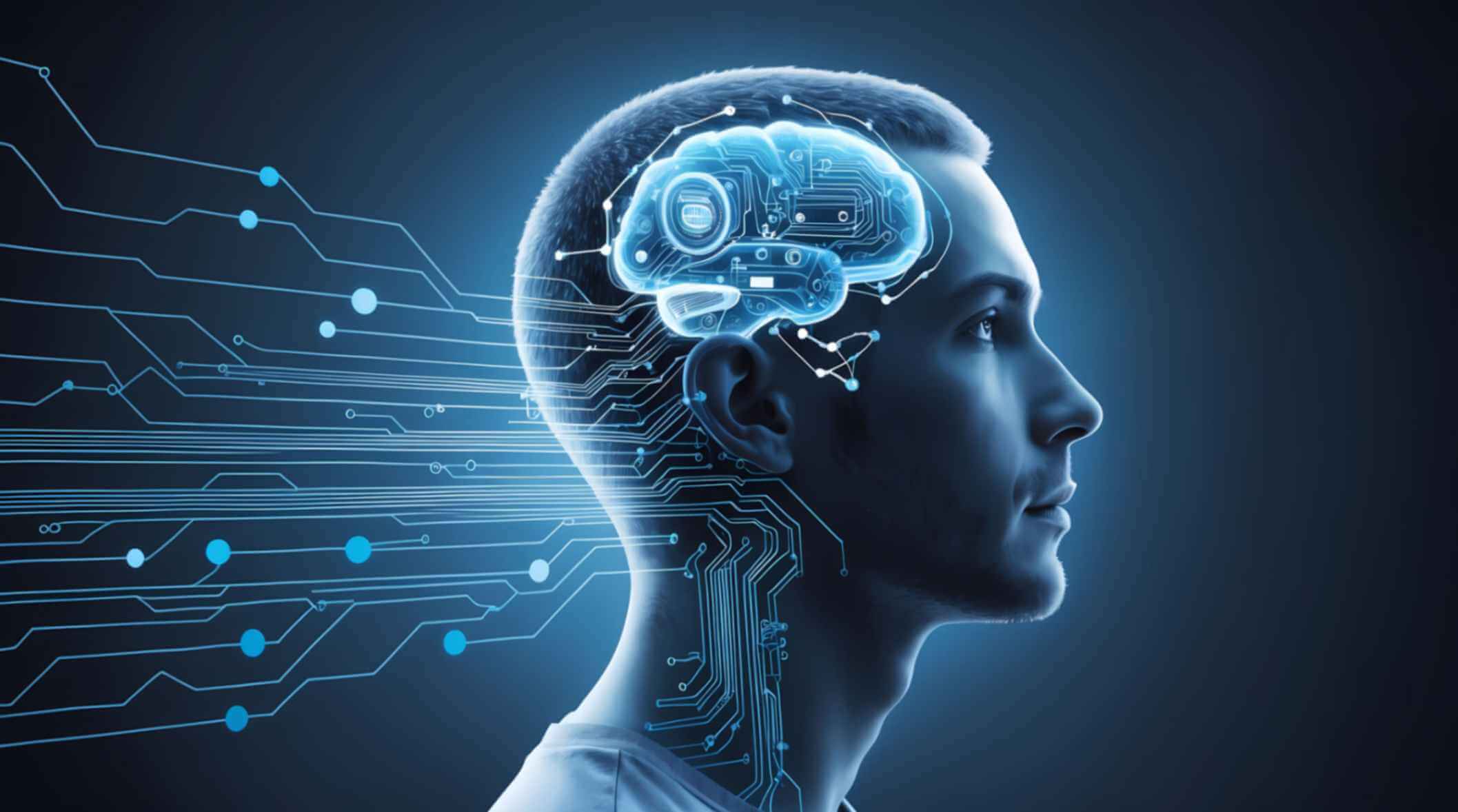
Neural networks are often described as the engines behind modern artificial intelligence, yet for many students they remain wrapped in mystery. The terminology can feel intimidating, the mathematics abstract, and the overall picture difficult to grasp. Still, at their core, neural networks are built on ideas that are surprisingly intuitive. They are inspired by the way biological brains process information, and they rely on patterns, connections, and gradual learning rather than rigid instructions. With the right perspective, neural networks become far less mysterious and far more fascinating.
A helpful starting point is to think about how humans learn. When a child learns to recognize a face, no one provides a formal rulebook describing every possible arrangement of eyes, noses, and expressions. Instead, the child observes many examples. Over time, the brain identifies recurring patterns and forms internal representations that make recognition possible. Neural networks operate in a comparable spirit. They learn from examples, detect patterns, and gradually refine their internal parameters to improve performance.
The term “neural network” comes from its loose resemblance to networks of neurons in the brain. Biological neurons receive signals, process them, and transmit outputs to other neurons. Artificial neurons mimic this idea in a simplified mathematical form. Each artificial neuron receives inputs, applies a transformation, and produces an output. These neurons are arranged in layers, creating a structured flow of information from raw input to final prediction.
Imagine a simple scenario in which a neural network is trained to distinguish between images of cats and dogs. The input layer receives the raw data, typically the pixel values of an image. These values are not meaningful by themselves; they are simply numerical representations of color and intensity. The network’s job is to transform these raw inputs into something more informative.
Between the input and output lie hidden layers, which are responsible for most of the learning and representation. Each neuron in a hidden layer performs a calculation that combines incoming signals. Every connection between neurons carries a weight, which reflects the strength or importance of that connection. A neuron multiplies each input by its corresponding weight, sums the results, and then passes the sum through an activation function.
Activation functions are essential because they introduce nonlinearity into the network. Without them, a neural network would behave like a simple linear model, unable to capture complex relationships. Nonlinearity allows networks to model intricate patterns, such as the subtle differences between animal features, speech sounds, or writing styles. Common activation functions compress or reshape values in ways that make learning stable and expressive.
The output layer produces the network’s final decision. In the case of cat and dog classification, the output might represent the probability that an image belongs to each category. The network does not inherently “understand” cats or dogs. It operates entirely through learned parameters, transforming inputs into outputs according to its internal configuration.
Learning occurs through a process known as training. During training, the network is shown many examples along with the correct answers. For each example, the network generates a prediction. This prediction is compared to the true label using a loss function, which measures the discrepancy between expectation and outcome. The loss function acts as a guide, indicating how far the network’s guess deviates from the correct result.
Once the loss is computed, the network adjusts its weights to reduce future errors. This adjustment relies on an algorithm called backpropagation, combined with an optimization method such as gradient descent. Backpropagation calculates how much each weight contributed to the error, allowing the network to update parameters efficiently. Gradient descent then nudges the weights in directions that decrease the loss.
Although these names may sound complex, the underlying logic is straightforward. The network makes a guess, evaluates how wrong it was, and slightly alters its internal connections to improve. Repeating this cycle across many examples gradually enhances performance. Over time, the network becomes better at mapping inputs to correct outputs.
One of the most remarkable aspects of neural networks is their ability to learn representations automatically. Traditional programming requires explicit rules crafted by humans. Neural networks, by contrast, discover useful features directly from data. In image recognition, early layers often learn to detect simple patterns such as edges or textures. Deeper layers combine these patterns into higher-level concepts, eventually forming structures that correspond to meaningful objects.
This hierarchical learning mirrors human perception. When we observe a scene, we first notice basic shapes and contrasts, then assemble them into recognizable forms. Neural networks replicate this layered interpretation, constructing complex understanding from simple building blocks.
Different architectures of neural networks are designed for different tasks. Feedforward networks, among the simplest forms, process information in a single direction from input to output. Convolutional networks specialize in spatial data like images, using filters that capture local patterns. Recurrent networks handle sequential data, making them suitable for language or time-based signals. More recent designs integrate attention mechanisms, enabling networks to weigh the relevance of different inputs dynamically.
Despite their power, neural networks are not magical. They depend heavily on data quality, computational resources, and careful design. A poorly trained network may perform inconsistently, while biased data can lead to skewed predictions. Understanding these limitations is as important as appreciating their capabilities.
Interpretability presents another challenge. Neural networks often operate as complex systems with many interacting parameters. While they may produce accurate results, explaining exactly why a particular decision was made can be difficult. Researchers continue to explore techniques that illuminate internal behavior, striving for models that are both powerful and transparent.
The success of neural networks across domains reflects their versatility. They contribute to language translation, medical imaging, recommendation systems, scientific modeling, and countless other applications. Their effectiveness arises from their capacity to approximate complex functions, adapt to varied data types, and learn directly from experience.
For students encountering neural networks for the first time, it helps to view them not as inscrutable machines but as flexible learners. Each component serves a clear purpose: neurons transform signals, weights encode knowledge, activation functions enable complexity, loss functions guide improvement, and optimization algorithms refine behavior. Together, these elements create systems capable of solving problems once thought exclusive to human intelligence.
A deeper appreciation emerges when one recognizes that neural networks are ultimately mathematical constructs shaped by human creativity. Their design reflects decades of research in statistics, computer science, neuroscience, and optimization theory. They are tools built by people, guided by principles, and constrained by practical considerations.
Learning about neural networks also encourages broader reflection on intelligence itself. Human cognition involves perception, memory, reasoning, and adaptation. Neural networks capture certain aspects of this process, particularly pattern recognition and function approximation. Yet they differ fundamentally from biological minds, lacking consciousness, emotion, and lived experience. This distinction underscores both the achievements and boundaries of artificial systems.
As the field evolves, neural networks continue to expand in scale and sophistication. Advances in hardware, algorithms, and theoretical understanding drive new possibilities. Still, the foundational ideas remain consistent: networks learn from data, refine connections, and transform information through layered computation.
Demystifying neural networks requires patience rather than advanced mathematics. By focusing on intuition, structure, and learning dynamics, students can build a solid conceptual framework. Technical details and equations deepen understanding, but the essential narrative is accessible. Neural networks are systems that learn patterns through interconnected units, guided by feedback and optimization.
In many ways, studying neural networks is an invitation to explore how complex behavior can emerge from simple rules. It reveals how representation, adaptation, and computation intertwine. Most importantly, it transforms an intimidating subject into a coherent and engaging story of learning machines.
With curiosity and a willingness to experiment, students can move beyond abstraction. Implementing small networks, visualizing their outputs, and observing training behavior turn theory into experience. Each experiment reinforces the same lesson: neural networks are not mysterious entities but understandable systems shaped by data, design, and iteration.
Leave a Reply