The Evolution of Skills in the Digital Era
The story of human progress is deeply intertwined with the story of skills. Every transformative period in history has demanded new abilities, reshaped existing competencies, and altered the ways individuals contribute to society. The digital era represents one of the most significant of these transitions. It is not merely a technological shift but a profound reconfiguration of how knowledge is created, shared, and applied. As digital systems permeate nearly every aspect of life, the definition of valuable skills continues to evolve in ways that challenge traditional assumptions about education, work, and expertise.
Earlier economic systems emphasized stability and repetition. Skills were often tied to specific trades, professions, or industrial functions. Mastery implied deep specialization within a relatively fixed environment. Technological change occurred, but at a pace that allowed institutions, industries, and individuals to adapt gradually. The digital age, by contrast, is characterized by acceleration. Tools, platforms, and entire sectors transform with remarkable speed, creating a landscape where adaptability becomes as essential as technical competence.
One of the most visible changes involves the relationship between information and expertise. Access to knowledge has expanded dramatically. Digital networks allow individuals to retrieve vast quantities of information almost instantly. This abundance alters the meaning of skill itself. Memorization and recall, once central to educational success, are no longer sufficient indicators of capability. The modern challenge lies in interpretation, evaluation, and synthesis. Individuals must navigate complexity, distinguish credibility from noise, and transform raw data into meaningful insight.
Digital literacy emerges as a foundational requirement within this context. Yet digital literacy extends beyond the ability to operate devices or navigate software interfaces. It encompasses an understanding of how digital systems shape communication, decision-making, and social interaction. Competence includes recognizing the implications of algorithms, appreciating issues of privacy and security, and engaging responsibly within interconnected environments. As digital infrastructures increasingly mediate human experience, this literacy becomes inseparable from broader intellectual and civic participation.
The evolution of skills is also evident in the growing importance of cognitive flexibility. Traditional career paths often assumed continuity. Education prepared individuals for defined roles with predictable trajectories. In the digital economy, however, professional identities are more fluid. Emerging technologies reshape tasks, automate routines, and create new specializations. Individuals must therefore cultivate the capacity to learn continuously, adapting to shifting tools and expectations. The ability to acquire new competencies becomes more valuable than the static possession of any single skillset.
This shift places renewed emphasis on learning how to learn. Metacognitive abilities—awareness of one’s own thinking processes, strategies for acquiring knowledge, and habits of reflection—gain strategic importance. Lifelong learning is no longer an aspirational concept but a practical necessity. The most resilient professionals are those who approach change not as disruption but as an ongoing feature of their intellectual and professional lives.
Creativity occupies an increasingly central role within the digital era. Automation excels at executing structured, repetitive processes. Human contribution, in contrast, is distinguished by imagination, conceptual reasoning, and inventive problem solving. Creativity is not confined to artistic domains; it underpins innovation across technology, science, entrepreneurship, and design. The capacity to generate novel ideas, reframe challenges, and explore unconventional solutions becomes a defining advantage in environments shaped by rapid transformation.
Closely connected to creativity is the skill of complex problem solving. Digital systems generate unprecedented opportunities alongside intricate challenges. Global connectivity, data-driven decision-making, and technological integration produce problems that rarely yield to simple procedures. Addressing such complexity requires analytical reasoning, systems thinking, and interdisciplinary awareness. Individuals must understand not only isolated variables but the relationships among them, recognizing how technological, social, and ethical dimensions intersect.
Communication skills, long valued in professional contexts, acquire new depth and urgency. Digital technologies expand channels of interaction while simultaneously introducing new forms of fragmentation. Virtual collaboration, remote work, and distributed teams redefine how individuals coordinate efforts and exchange ideas. Effective communication now involves clarity across mediums, cultural sensitivity, and the ability to convey meaning in environments where physical presence is often absent. Precision of language, thoughtful listening, and constructive dialogue remain indispensable despite technological mediation.
The digital era also amplifies the significance of collaboration. Knowledge creation and innovation increasingly occur within networks rather than isolated silos. Interdisciplinary projects, cross-functional teams, and global partnerships characterize modern professional activity. Collaborative competence includes not only technical coordination but interpersonal awareness, empathy, and the capacity to navigate diverse perspectives. The most effective contributors are those who integrate expertise while fostering shared understanding.
Another defining feature of the digital transformation is the blending of technical and human-centered skills. Early narratives about technological progress sometimes implied a stark divide between technical proficiency and broader intellectual abilities. Contemporary realities reveal a more nuanced picture. Technical fluency remains important, yet its effectiveness depends on contextual understanding. Data analysis, for instance, requires statistical reasoning alongside ethical judgment. Software development benefits from design thinking and user empathy. Technological capability is most powerful when integrated with human insight.
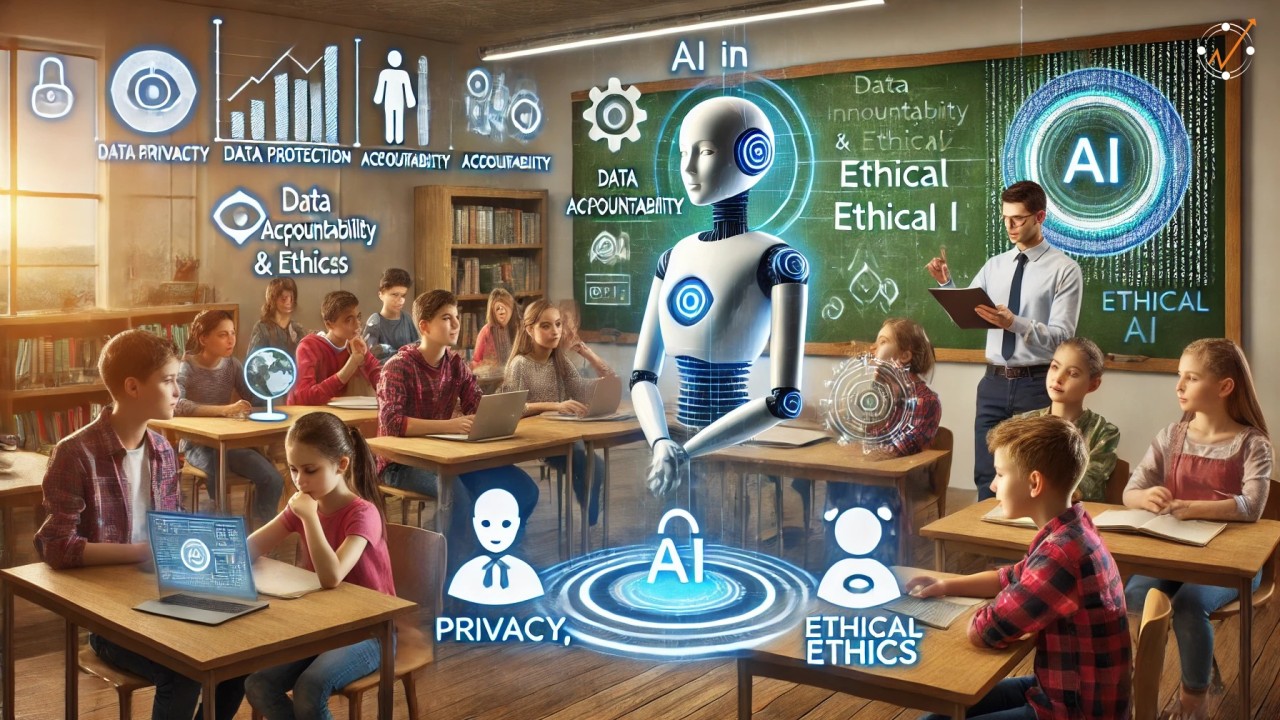
Ethical reasoning thus becomes a critical dimension of modern skill development. Digital technologies influence privacy, equity, access, and social dynamics. Decisions made by designers, engineers, policymakers, and organizations carry far-reaching consequences. Individuals operating within digital ecosystems must possess the capacity to evaluate implications, balance competing values, and act responsibly. Ethical awareness is not an optional supplement but an intrinsic component of professional competence.
Adaptability, often cited as a hallmark of future-ready individuals, reflects both cognitive and emotional dimensions. Navigating uncertainty requires resilience, curiosity, and openness to change. Emotional intelligence—the ability to understand one’s own responses, interpret social dynamics, and sustain motivation—supports effective adaptation. As professional environments evolve, individuals encounter unfamiliar tools, roles, and expectations. Those who embrace continuous development are better positioned to thrive amid transition.
Educational systems face the challenge of responding to these evolving demands. Traditional curricula and assessment models were frequently designed for stability and standardization. Preparing learners for the digital era requires more flexible approaches that emphasize inquiry, exploration, and transferable capabilities. Project-based learning, experiential engagement, and interdisciplinary study reflect efforts to align education with contemporary realities. The objective shifts from transmitting static knowledge toward cultivating intellectual agility.
Assessment practices likewise require reconsideration. Measuring learning through narrow metrics may obscure the development of critical competencies such as creativity, collaboration, and complex reasoning. Alternative evaluation frameworks seek to capture deeper dimensions of understanding, emphasizing application, reflection, and synthesis. Such approaches recognize that meaningful skill development often resists simplistic quantification.
The evolution of skills also reshapes the concept of expertise. Authority is no longer defined solely by access to information but by the ability to interpret and apply knowledge effectively. Continuous learning, cross-disciplinary awareness, and contextual intelligence redefine professional credibility. Expertise becomes dynamic rather than fixed, reflecting ongoing engagement with emerging ideas and technologies.
Importantly, the digital era does not diminish the value of humanistic skills; it elevates them. Critical thinking, ethical judgment, creativity, and empathy remain central to meaningful contribution. Technology expands capabilities but does not replace the need for interpretation, imagination, and responsible decision-making. The most enduring skills are those that enable individuals to navigate complexity, collaborate constructively, and generate insight across changing contexts.
The transformation of skills is therefore not solely a technical phenomenon but a cultural and intellectual one. It reflects changing relationships between humans and information, between stability and innovation, between specialization and adaptability. Understanding this evolution encourages a broader view of learning as a lifelong endeavor rather than a discrete phase.
The story of human progress is deeply intertwined with the story of skills. Every transformative period in history has demanded new abilities, reshaped existing competencies, and altered the ways individuals contribute to society. The digital era represents one of the most significant of these transitions. It is not merely a technological shift but a profound reconfiguration of how knowledge is created, shared, and applied. As digital systems permeate nearly every aspect of life, the definition of valuable skills continues to evolve in ways that challenge traditional assumptions about education, work, and expertise.
Earlier economic systems emphasized stability and repetition. Skills were often tied to specific trades, professions, or industrial functions. Mastery implied deep specialization within a relatively fixed environment. Technological change occurred, but at a pace that allowed institutions, industries, and individuals to adapt gradually. The digital age, by contrast, is characterized by acceleration. Tools, platforms, and entire sectors transform with remarkable speed, creating a landscape where adaptability becomes as essential as technical competence.
One of the most visible changes involves the relationship between information and expertise. Access to knowledge has expanded dramatically. Digital networks allow individuals to retrieve vast quantities of information almost instantly. This abundance alters the meaning of skill itself. Memorization and recall, once central to educational success, are no longer sufficient indicators of capability. The modern challenge lies in interpretation, evaluation, and synthesis. Individuals must navigate complexity, distinguish credibility from noise, and transform raw data into meaningful insight.
Digital literacy emerges as a foundational requirement within this context. Yet digital literacy extends beyond the ability to operate devices or navigate software interfaces. It encompasses an understanding of how digital systems shape communication, decision-making, and social interaction. Competence includes recognizing the implications of algorithms, appreciating issues of privacy and security, and engaging responsibly within interconnected environments. As digital infrastructures increasingly mediate human experience, this literacy becomes inseparable from broader intellectual and civic participation.
The evolution of skills is also evident in the growing importance of cognitive flexibility. Traditional career paths often assumed continuity. Education prepared individuals for defined roles with predictable trajectories. In the digital economy, however, professional identities are more fluid. Emerging technologies reshape tasks, automate routines, and create new specializations. Individuals must therefore cultivate the capacity to learn continuously, adapting to shifting tools and expectations. The ability to acquire new competencies becomes more valuable than the static possession of any single skillset.
This shift places renewed emphasis on learning how to learn. Metacognitive abilities—awareness of one’s own thinking processes, strategies for acquiring knowledge, and habits of reflection—gain strategic importance. Lifelong learning is no longer an aspirational concept but a practical necessity. The most resilient professionals are those who approach change not as disruption but as an ongoing feature of their intellectual and professional lives.
Creativity occupies an increasingly central role within the digital era. Automation excels at executing structured, repetitive processes. Human contribution, in contrast, is distinguished by imagination, conceptual reasoning, and inventive problem solving. Creativity is not confined to artistic domains; it underpins innovation across technology, science, entrepreneurship, and design. The capacity to generate novel ideas, reframe challenges, and explore unconventional solutions becomes a defining advantage in environments shaped by rapid transformation.
Closely connected to creativity is the skill of complex problem solving. Digital systems generate unprecedented opportunities alongside intricate challenges. Global connectivity, data-driven decision-making, and technological integration produce problems that rarely yield to simple procedures. Addressing such complexity requires analytical reasoning, systems thinking, and interdisciplinary awareness. Individuals must understand not only isolated variables but the relationships among them, recognizing how technological, social, and ethical dimensions intersect.
Communication skills, long valued in professional contexts, acquire new depth and urgency. Digital technologies expand channels of interaction while simultaneously introducing new forms of fragmentation. Virtual collaboration, remote work, and distributed teams redefine how individuals coordinate efforts and exchange ideas. Effective communication now involves clarity across mediums, cultural sensitivity, and the ability to convey meaning in environments where physical presence is often absent. Precision of language, thoughtful listening, and constructive dialogue remain indispensable despite technological mediation.
The digital era also amplifies the significance of collaboration. Knowledge creation and innovation increasingly occur within networks rather than isolated silos. Interdisciplinary projects, cross-functional teams, and global partnerships characterize modern professional activity. Collaborative competence includes not only technical coordination but interpersonal awareness, empathy, and the capacity to navigate diverse perspectives. The most effective contributors are those who integrate expertise while fostering shared understanding.
Another defining feature of the digital transformation is the blending of technical and human-centered skills. Early narratives about technological progress sometimes implied a stark divide between technical proficiency and broader intellectual abilities. Contemporary realities reveal a more nuanced picture. Technical fluency remains important, yet its effectiveness depends on contextual understanding. Data analysis, for instance, requires statistical reasoning alongside ethical judgment. Software development benefits from design thinking and user empathy. Technological capability is most powerful when integrated with human insight.
Ethical reasoning thus becomes a critical dimension of modern skill development. Digital technologies influence privacy, equity, access, and social dynamics. Decisions made by designers, engineers, policymakers, and organizations carry far-reaching consequences. Individuals operating within digital ecosystems must possess the capacity to evaluate implications, balance competing values, and act responsibly. Ethical awareness is not an optional supplement but an intrinsic component of professional competence.
Adaptability, often cited as a hallmark of future-ready individuals, reflects both cognitive and emotional dimensions. Navigating uncertainty requires resilience, curiosity, and openness to change. Emotional intelligence—the ability to understand one’s own responses, interpret social dynamics, and sustain motivation—supports effective adaptation. As professional environments evolve, individuals encounter unfamiliar tools, roles, and expectations. Those who embrace continuous development are better positioned to thrive amid transition.
Educational systems face the challenge of responding to these evolving demands. Traditional curricula and assessment models were frequently designed for stability and standardization. Preparing learners for the digital era requires more flexible approaches that emphasize inquiry, exploration, and transferable capabilities. Project-based learning, experiential engagement, and interdisciplinary study reflect efforts to align education with contemporary realities. The objective shifts from transmitting static knowledge toward cultivating intellectual agility.
Assessment practices likewise require reconsideration. Measuring learning through narrow metrics may obscure the development of critical competencies such as creativity, collaboration, and complex reasoning. Alternative evaluation frameworks seek to capture deeper dimensions of understanding, emphasizing application, reflection, and synthesis. Such approaches recognize that meaningful skill development often resists simplistic quantification.
The evolution of skills also reshapes the concept of expertise. Authority is no longer defined solely by access to information but by the ability to interpret and apply knowledge effectively. Continuous learning, cross-disciplinary awareness, and contextual intelligence redefine professional credibility. Expertise becomes dynamic rather than fixed, reflecting ongoing engagement with emerging ideas and technologies.
Importantly, the digital era does not diminish the value of humanistic skills; it elevates them. Critical thinking, ethical judgment, creativity, and empathy remain central to meaningful contribution. Technology expands capabilities but does not replace the need for interpretation, imagination, and responsible decision-making. The most enduring skills are those that enable individuals to navigate complexity, collaborate constructively, and generate insight across changing contexts.
The transformation of skills is therefore not solely a technical phenomenon but a cultural and intellectual one. It reflects changing relationships between humans and information, between stability and innovation, between specialization and adaptability. Understanding this evolution encourages a broader view of learning as a lifelong endeavor rather than a discrete phase.